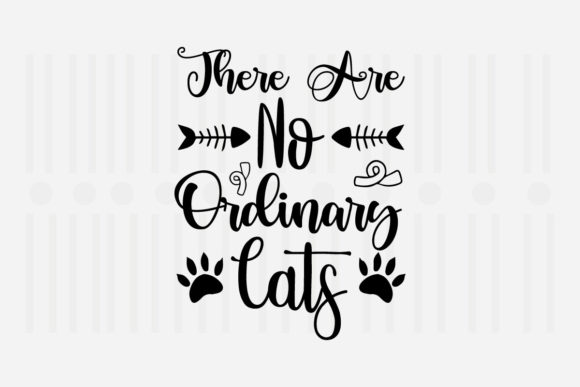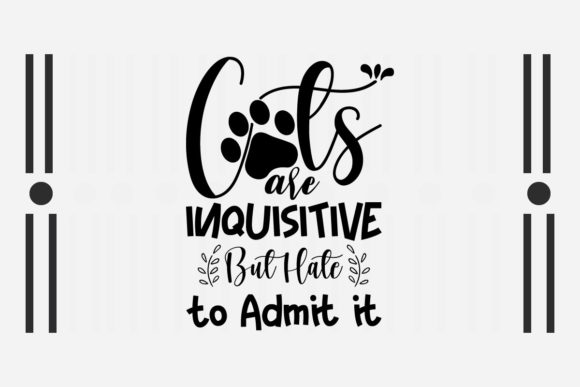
CATS ARE INQUISITIVE but HATE SVG Graphics
As a brand designer who’s helped over 200 local businesses refine their visual identity—from indie candle makers and farmhouse soap studios to neighborhood bakeries and children’s toy boutiques—I recently evaluated CATS ARE INQUISITIVE but HATE SVG for a real-world branding project. The brief? Refresh packaging and social media visuals for “Whisker & Wheat,” a small-batch oat milk bakery in Portland that sells cat-themed pastries (yes, really). What stood out wasn’t just the playful irony of the phrase—it was how this graphic design asset landed *in context*: on kraft paper labels, matte ceramic mugs, Instagram story banners, and die-cut hang tags.
A Whimsical, Handmade Vibe—Not Just Another Clipart
First impression matters—and CATS ARE INQUISITIVE but HATE SVG delivers immediate warmth and wit. It reads as handmade, not mass-produced: slightly uneven line weight, subtle texture in the vector rendering, and a clever typographic rhythm that leans into charm rather than slickness. It suggests a brand personality that’s friendly, gently irreverent, and confidently local—not corporate, not generic, and definitely not trying too hard. For small business branding, that tone is gold. It fits naturally with organic skincare brands, floral studios using hand-lettered accents, or boutique coffee shops leaning into artisanal storytelling. It feels modern without sacrificing approachability—ideal for Crafts-focused sellers who value authenticity over polish.
Where This Graphic Design Asset Earns Its Keep
In real local business use, CATS ARE INQUISITIVE but HATE SVG shines where personality meets practicality:
- Product labels and packaging accents: Works beautifully scaled down on 2” x 3” soap labels or blown up across a 12” x 18” seasonal poster—thanks to its clean vector foundation (EPS/SVG included).
- Hero graphics for social media: Stands out in Instagram carousels and Pinterest pins without competing with product photography—especially when layered over soft neutral backgrounds or paired with warm serif type.
- Printable design elements: Used as a border motif on thank-you cards, as a corner flourish on price lists, or as a repeating pattern on bakery bags—its 100% color-changeable nature means it adapts seamlessly to your brand palette.
- Product mockups and promotional ads: Renders crisply at any size in Canva, Adobe Illustrator, or Affinity Designer—no pixelation, no guesswork. Ideal for Etsy banners, local market flyers, or email headers.
- Seasonal campaign visuals: Paired with autumnal tones for Halloween cookie boxes or mint greens for spring plant-based launches, it adds thematic cohesion without needing redesign.
What This Asset Does for Your Brand Identity
When integrated thoughtfully, CATS ARE INQUISITIVE but HATE SVG strengthens several key pillars of professional branding:
- Stronger first impression: On crowded shelves or fast-scrolling feeds, its expressive tone stops attention—without shouting.
- Better product recognition: Repeated as a subtle watermark on packaging or a consistent accent across stickers and napkins, it builds visual memory.
- Clearer visual hierarchy: Its balanced composition lets primary messaging (like flavor names or ingredients) stay dominant—while still adding character.
- More consistent brand identity: As a reusable, editable graphic design asset, it ensures continuity across physical and digital touchpoints.
- Improved customer trust: Thoughtful, well-executed design signals care—especially important for handmade business buyers who value intentionality.
Smart Usage Boundaries—Where Less Is More
This isn’t a one-size-fits-all solution. Use CATS ARE INQUISITIVE but HATE SVG carefully in these situations:
- Formal or luxury minimalist branding: Its playful energy clashes with ultra-sleek skincare or premium wine labels aiming for quiet sophistication.
- Very small labels or ingredient-heavy layouts: Avoid placing it directly over fine-print regulatory text—it’s decorative, not functional typography.
- Crowded packaging designs: If your box already features hand-drawn icons, botanical illustrations, and multiple fonts, adding this may dilute clarity.
- Low-contrast backgrounds: Test it against light grays or cream substrates—some SVG exports render faintly without proper stroke reinforcement.
- Legal or compliance-critical zones: Never use it in place of required labeling elements like net weight, allergen statements, or certifications.
Practical Brand Designer Notes You’ll Actually Use
Before locking it into your next client project or shop launch, run these checks:
- Test it on real packaging mockups—not just screen previews—to assess scale, spacing, and tactile impact.
- Convert to grayscale and print a sample: does the line integrity hold? Will it read clearly on uncoated paper?
- Preview it on small labels (e.g., 1.5” diameter soap stickers)—does legibility hold at 8pt equivalent size?
- Layer it beside your brand fonts: does it harmonize with serif body copy? Contrast well with bold sans-serif headlines? Complement handwritten script accents?
- Compare it side-by-side with top three local competitors’ packaging—does it differentiate, or blend in?
- Inspect the SVG file in Illustrator: are paths clean? Are grouped layers intuitive for future edits? Is transparency preserved in PNG exports?
- Verify commercial license terms—especially if you’re applying it to physical products for resale (e.g., mugs, tote bags, or greeting cards).
For creative entrepreneurs building real local business presence—whether launching a candle brand from a garage studio or rebranding a decades-old florist—the right graphic design asset shouldn’t just look good. It should serve your voice, support your story, and scale across every customer touchpoint without friction. CATS ARE INQUISITIVE but HATE SVG does exactly that—when chosen intentionally, tested rigorously, and applied with brand discipline. In a sea of generic clipart and overdesigned templates, it’s a rare find: a Crafts-rooted, Graphics-forward asset that feels human, holds up professionally, and quietly says, “We made this—with care, and maybe a little cat-approved irony.”